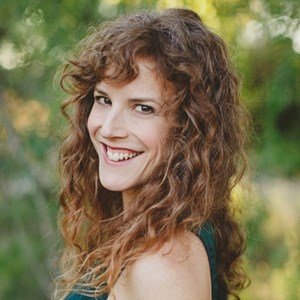
Heather Westenhofer, CMC, Shares Her Reflections

Heather Westenhofer, CMC

I entered the Community Ministry Certificate program last year after being thrust unexpectedly into a spiritual leadership position. I wasn’t sure what to expect from such an affordable and flexible curriculum but my experience far exceeded expectations. Every piece of the curriculum spoke directly to places where I needed to bulk up my training. And the support I received from my mentor was outstanding.

Through this program, I was able to take a thorough look at how I came to where I am today, and for the first time I made sense of how the various systems I work in — witchcraft, yoga, and Hawaiian Lua — influence and come together in my personal and professional life. Part of my lack of confidence in being “out” as a Pagan stemmed from not having the vocabulary to describe my beliefs. Now I can answer questions about my beliefs and priestessing work confidently.

When I entered the program, I was not even sure if I was really interested in “ministry” work, and though I was thinking about ordination, I really had no idea how that would fit in with my eclectic practice. By being introduced to other forms of Paganism, and through suggestions from both my CHS and Sacred Well Congregation mentors, I realized how beneficial it would be to undertake studies in other Pagan traditions. I now understand my ordination options much more fully and may pursue ordination in more than one tradition.

The terminology and frameworks I learned helped me feel much more confident that I can be of service to others in a methodical and responsible way. I feel better equipped to counsel yoga and Lua students and I have even developed an interest in chaplaincy. One of the main reasons I entered the program was to develop confidence in my counseling abilities and I don’t feel I need to shy away from these responsibilities any more.

Since beginning the program, I have joined the Ritual Planning Committee of Reclaiming Los Angeles and I have already acted as a professional officiant for two different events. I look forward to seeing where else this new adventure will take me!
Seminary Announces New Vision-Mission Statements

COLUMBIA, SC — Cherry Hill Seminary today announced new vision and missions statements for the organization. The statements reflect several months’ work by a special committee which consisted of board members, students, staff, volunteers, and faculty, and followed a special survey in the spring of all who are on the broader Seminary email list. Here are the new foundational texts:

Vision 2023: Cherry Hill Seminary envisions a world where people of Pagan and Nature based spiritualities can receive competent and compassionate spiritual support.

Mission 2023: Cherry Hill Seminary serves Pagan and Nature-based communities by providing transformative education and empowering students to advance academically and lead spiritually.

Board chair Jeffrey Keefer noted, “We are proud of our work, and as we look into the future, we want to invite those intrigued and feel called to share in our vision to join us as we seek to make the world a better place. Know that our efforts are guided through the lens of our Mission, one we continue to live every day.”

The committee was chaired by Laurel Holmstrom-Keyes, who said, “The impetus for reviewing the Vision and Mission came from our pursuit of [future] accreditation. It was important to the Board that our Vision and Mission were strongly reflective of the work of Cherry Hill Seminary.”

A promotional tag line, “Seek-Explore-Empower,” was also suggested by the committee. A process for rollout and implementation of the new vision and mission include suggestions for faculty, board and staff use, posting in strategic locations on the web site and in classroom platforms, new social media graphics and the video here.

Jo Carson

Jo Carson seeks to create positive visions of the future through Feraferia, A Love Culture for Wilderness. She is Chair of the Board of Feraferiawhich she joined in 1972. Jo holds a Masters’ Degree from UCLA in film production, and her professional life has included camera work on many feature films. She directed and produced the documentary feature Dancing With Gaia: Earth Energy, Sacred Sexuality and the Return of the Goddess, plus documentary shorts A Dance for the Goddess about Feraferian rites, and Himalayan Pilgrimage: A Visionary Journey. She authored Celebrate Wildness: Magic, Mirth and Love on the Feraferian Path, an introduction to Feraferia through artShe is currently working on a Feraferia Tarot deck and book.

Kerry Robinson, CMC, Shares Her Reflections

Kerry M. Robinson, CMC

This entire course has been valuable in a number of ways: clarifying who I am, both strengths and deficits, giving me new ideas and tools for working with others within or outside of my faith system, and helping me clarify my foundation.

For me, some of the most important section(s) where those asking me to clarify my values, ethics and morals, and my personal theology. For me, that type of work is about accountability, critical thinking, and intentional action.  Questions and assignments helped improve my perspective, deepened my understanding that there’s a difference between belief and knowledge, and encouraged me to articulate my position regarding personal values, etc.  I had to identify what and why, my contradictions, whether actions and thoughts were congruent, and what I’d need to do to achieve congruence between beliefs and actions.

These assignments affirmed the core pieces I’ve carried with me since my discovery of Paganism, gave them names, and deepened my understanding of what matters and why.  I can see, more clearly, the intersection within my personal, professional, and spiritual life.  Am I true to myself in all arenas?  My answers helped me answer that question, and I was pleased to see I’ve done much to “practice what you preach,” and to be a model for others.  I can also offer these reflections, and tangible tools, to others who’re seeking to do clarification work.

Not only do I feel more confident that I’ve done a deeper level of clarification work regarding the topic of ethics, morals, and values, I now have material I can return to; a manifesto that I can check-in with regarding whether my original lists are still true, if they’ve changed somehow, or if they need to be changed and further clarified.  I love this type of work, would like to see other leaders do it, do more of it, and do it regularly.

My advice?  Take this section (morals, ethic, values) very seriously. We think we know the answers to these types of questions, though the reality is that we’re likely filled with assumptions and biases, and may’ve never actually clarified our values/morals/ethics/personal theology in a concrete manner. How can we explain, or teach others, if we can’t articulate our own position?  Catchphrases such as Love and light, be nice, and treat others as you would be treated are concepts that can have vastly different meanings.

Do the work, and revisit it every few years in order to explore if anything has changed.  In doing so, we travel through the psycho-social stages of development, discover where we’re at regarding spiritual development, and get to be reminded that each person has a different list from our own, or may prioritize things differently. We can continually explore whether we’re being true to ourselves and goals, and answer the questions of whether our role-modeling matches our stated goals and skills, and what we leave behind as a legacy.

Self-assessment and clarification work are forms of shadow-work in my opinion. We may not like what we find.  We might discover we’ve lost our way, and that we’re hypocrites. These assignments help identify if that’s the case, and provide tools for doing something about it.  To be of service, to self, others, and to the divine, we benefit by continual self-reflection and a willingness to change.