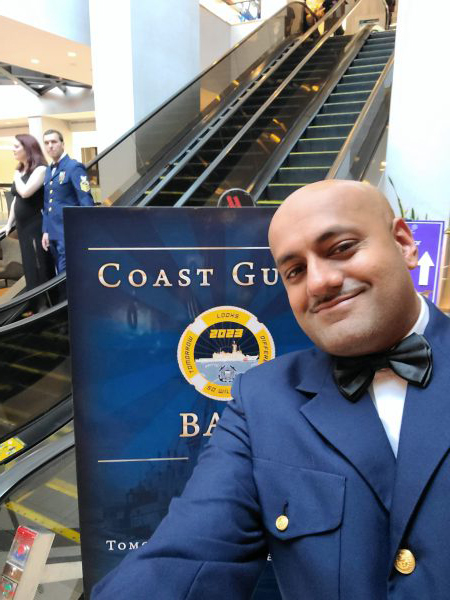
Christopher Deane, CMC, Shares His Reflections

Christopher Deane, CMC

Embarking on a journey through the Community Ministry Certificate program was a transformative experience that left an indelible mark on my life, reshaping not only my beliefs but also the very essence of how I perceive the world around me. This exploration provided a unique opportunity to delve into the rich tapestry of spiritual perspectives, inviting me to broaden my understanding and embrace a more inclusive worldview.

One of the profound impacts of this course was its ability to open the door to diverse spiritual perspectives. Learning about the intricacies of pagan beliefs exposed me to a realm of thought that transcended conventional norms. This exposure fostered a deep sense of empathy and tolerance as I navigated the nuances of belief systems that were previously unfamiliar. It allowed me to appreciate the beauty in the diversity of human spirituality, breaking down preconceived notions and encouraging a more open-minded approach to different ways of understanding the sacred.

Paganism’s inherent connection to nature became a guiding force in reshaping my relationship with the environment. The emphasis on the interconnectedness of all living things and the reverence for the natural world prompted a profound shift in my consciousness. Spending time immersed in the teachings of paganism, I discovered a newfound appreciation for the beauty of the Earth, prompting me to explore nature more intentionally. This deepened connection with the environment not only became a source of solace but also instilled a sense of responsibility to nurture and protect the delicate balance of our planet.

As the course unfolded, I found myself engaged in rituals and practices that went beyond mere observance—they became powerful tools for personal empowerment. The symbolism embedded in these rituals and the intentional nature of pagan practices empowered me to take control of my own destiny. Through the exploration of these ancient rites, I discovered a reservoir of strength within myself, enabling me to face life’s challenges with a newfound resilience.

Furthermore, the course facilitated the formation of a community of like-minded individuals. This community became a source of support, understanding, and shared wisdom. The bonds forged within this circle of individuals who shared a common spiritual journey provided a sense of belonging that was both comforting and empowering. It was within this community that I found encouragement to refine and articulate my evolving beliefs, creating a space where personal growth was not only encouraged but celebrated.

In essence, taking a course on paganism not only broadened my spiritual horizons but also instigated a profound personal metamorphosis. It encouraged me to embrace a more inclusive worldview, strengthened my connection with nature, empowered me to take control of my destiny, and fostered a sense of community that became an anchor in my spiritual journey. As I continue to refine and shape my beliefs, I carry with me the invaluable lessons learned from the course—a journey that transcended academia and became a transformative odyssey of self-discovery.
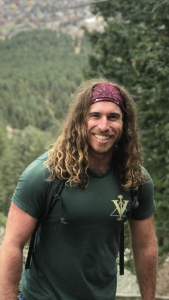
Coming to the Center Hosts Padraic Fitzgerald

Saturday, March 16, 2024 at 3:00 PM ET US

Click to register for this free livestream event

Padraic Fitzgerald is an adjunct instructor at the College of Charleston in their Religious Studies department. He recently graduated from the University of Denver and Iliff School of Theology Joint Doctoral Program in Religious Studies (’23). His dissertation, titled Til Valhall!: The Formation of Nordic Neopagan Identity, Religiosity, and Community at a Norwegian Heavy Metal Festival, explores the Midgardsblot heavy metal festival as a temporary sacred space where people self-identifying as belonging to or adjacent to Nordic Neopaganism engage with manifold forms of Nordic folk symbolism to refine religious identities and achieve religious experiences. His research interests include material religion with an emphasis on the natural environment and religious musicology, the “greening” of religion, Northern European folk traditions, Neopagan movements, and the relationship between religion and popular culture.

CHS Pagans at 2023 Parliament

from Aline (Macha) O’Brien Pagans, both groups and individuals, were a strong and visible presence at the most recent Parliament of the World’s Religions in Chicago. I attended as a National Interfaith Representative of the Covenant of the Goddess (cog.org), without whose support I wouldn’t have been there, but also less formally for Cherry Hill Seminary and COMPASS (pagancommons.org). On behalf of the third, I found several Pagans eager to participate in Hematite Inmate Ministries, as well as potential interviewers — interviewees are easy to find, interviewers much harder — for the Pagan History Project. What I was most proud of, however, were two plenary speeches by Pagans, both on the rise of facsism, one by PWR Trustee Phyllis Curott and the other by CoG member Dr. Gus diZerega.

CHS Pagans at 2023 Parliament

from Lawrence Lerner – The 2023 Chicago Parliament of the World’s Religions celebrated 130 years in the birthplace of the modern interfaith movement. 2023 was the largest Pagan presence in its history, with approximately 200 Pagans in attendance. Our community had an exceptionally welcoming, inviting interfaith room, curated by Twilla York, featuring 20 insightful talks, two tables brimming with reading literature and books, and contributions from a dozen or more Pagan traditions and groups. Rev. Laura Gonzalez added to the grandeur with a powerful presentation during the opening ceremony in front of 8,000 attendees. It was a moment of progress. During one of the first modern Parliaments, members of one faith group walked off stage when the Goddess was invoked. Join us in future events as we continue to raise awareness of the Pagan presence and celebrate its contributions to the interfaith movement. Summarizing an event three years in the making and many sessions and panels was tough. I wanted to acknowledge the Pagan presence and stellar work of so many people, but two rose to the top. Our interfaith room showed the effort and dedication of the entire Pagan community.