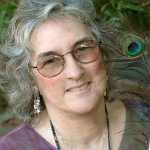
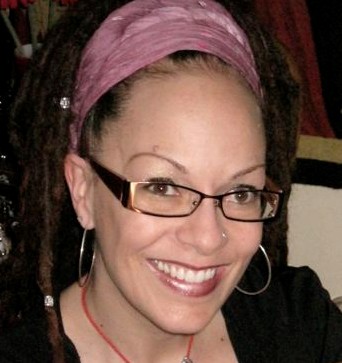
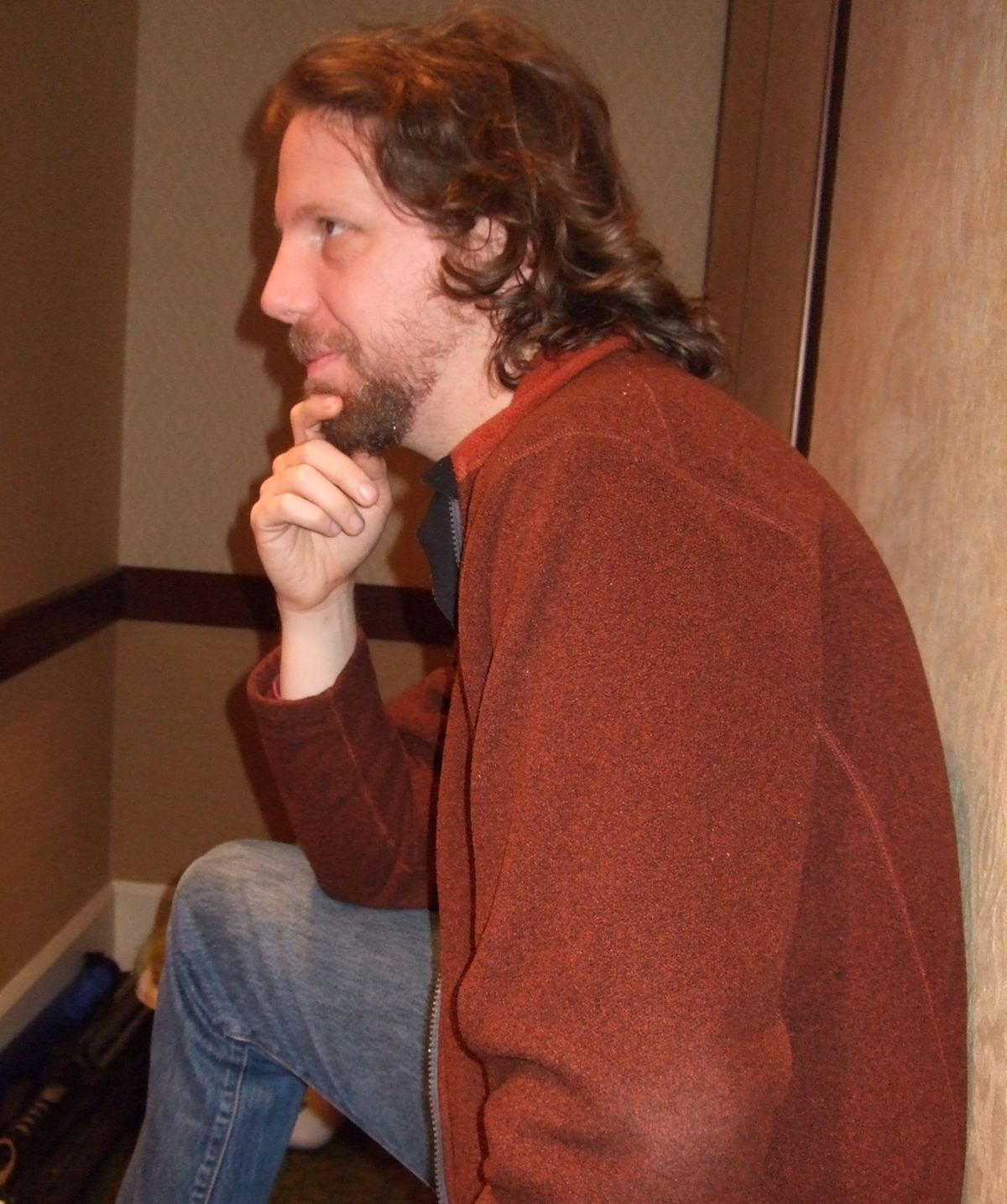
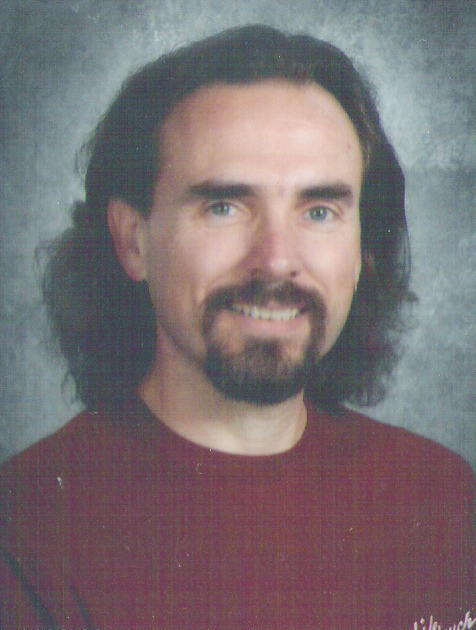
Columbia, S.C. – M. Macha NightMare, a longtime teacher and administrator at Cherry Hill Seminary, will resign as Chair of the Public Ministry department and take a position on the Board of Directors, effective Oct. 31.
Alline O’Brien, Past President
Nightmare in 2002 designed and taught the online course, “Call of the Dark Mother: Working with Death and Dying.” “Call” has consistently remained one of the most popular courses offered by Cherry Hill. During that time NightMare also served as Public Information Officer and as Chair of the Department of Public Ministry. She helped raise funds and recruit many faculty and board members to the first graduate-level Pagan seminary in the United States.
NightMare says she has felt useful, appreciated and satisfied in her work with Cherry Hill. “I have found working toward growing the first viable online NeoPagan seminary to be tremendously rewarding,” says NightMare. “As we approach the goal of accreditation, I believe I can better use my peculiar set of gifts by serving on CHS’s Board of Directors, where I wish to continue my work fundraising, recruiting faculty and general networking. I’m both dazzled and humbled by the Pagans who affiliate with CHS, either as faculty or students.”
Holli Emore, CFRE, Executive Director of Cherry Hill, says she looks forward to continuing her work with NightMare in her new role as board member. “Working with Macha has been an amazing privilege. She genuinely loves meeting people and making the introductions which help people enhance their own best qualities. While we will miss her dedication and drive as a member of the management team, Macha’s command of the overarching issues in the national Pagan community, plus her widespread connectedness makes her an ideal board member.”
NightMare holds Elder and ministerial credentials through The Covenant of the Goddess. She is a former National First Officer and has served the Covenant in many other capacities since 1981. She is a member of the Biodiversity Project Spirituality Working Group, the Sacred Dying Foundation Advisory Council as well as the Nature Religion Scholars Network. NightMare is author of “Witchcraft and the Web: Weaving Pagan Traditions Online” and “Pagan Pride: Honoring the Craft and Culture of Earth and Goddess,” and co-author of “The Pagan Book of Living and Dying: Practical Rituals, Prayers, Blessings, and Meditations on Crossing Over.”
Cherry Hill Seminary provides quality higher education and practical training in Pagan ministry. CHS is the only graduate-level education for Pagan ministry in the world, through online distance-learning classes, regional workshops and intensive retreats. More information is available online at www.cherryhillseminary.org.
COLUMBIA, SC — Cherry Hill Seminary is pleased to announce that the South Carolina Commission on Higher Education has notified the school of the religious exemption which allows the Seminary to grant master’s degrees. Beginning in September 2009 Cherry Hill Seminary will offer the following Master’s degrees.
Master of Divinity (72 hours). Basic professional ministry degree, balancing Pagan academics, personal spiritual development, and Pagan ministerial practice. Most professional religious positions, such as chaplaincy, certain types of counseling, and other ministerial activities require a Master of Divinity degree.
Master of Pagan Pastoral Care and Counseling (60 hours). Specialty degree, (pastoral care, religion and psychotherapy, or Pagan marriage and family) offers reflection, study and supervised practice which prepare the graduate to pursue various aspects of Pastoral Care and Counseling.
Master of Pagan Ministry (48 hours). Preparation for specialized ministry in such areas as education, media, the arts or other practices, combines Pagan academics with practical and/or pastoral experience with diverse Pagan populations.
Master of Pagan Studies (48 hours) Pagan academics degree, focusing on study and research in any one curriculum concentration major.
“As Paganism becomes an increasingly recognized and influential religion, we are delighted to be able to offer higher education for those who would serve as clergy professionals, whether as scholars, mentors, counselors, teachers, artists, organizers, leaders, chaplains and/or advocates in local, regional, national and international settings,” said the Academic Dean, Cynthia Jane Collins, M.Div., M.S. “A challenge we face is to integrate academic excellence, practical supervised training, individual responsibility and personal and community spiritual development from a Pagan perspective. We seek to enhance and expand our depth and breadth while finding ways to serve others, Pagans and non-Pagans alike. “
Originally founded in Vermont in 1997, and now based in South Carolina, Cherry Hill Seminary provides the only graduate program of Pagan seminary studies in the world. The distance education program holds twice-yearly intensive retreats, with all regular classes being held online. Faculty include such notables as Michael York, Ph.D., founder of the first Pagan graduate studies program in the world (at Bath Spa University, England), Grove Harris, M.Div., former managing director of the Harvard Religious Pluralism Project, now program director for the Parliament of the World’s Religions, and Dr. David Oringderff, founder of Sacred Well Congregation, sponsor of the well-known Wiccan circle at Fort Hood, Texas.
“We now enter a crucial period in our development,” said Kirk Thomas, Cherry Hill Seminary Board of Directors President. “Our next hurdle is to meet the requirements for accreditation, a process which normally takes several years.” Thomas, current Vice-Archdruid for Ár nDraíocht Féin: A Druid Fellowship (ADF), noted that Cherry Hill students tend to be mature adults with considerable life experience, who often already possess graduate degrees and professional credentials in such fields as social work, counseling, or psychology.
By spring, Cherry Hill Seminary will announce an invitation to apply for admission to the master’s programs, including transition information for existing certificate program students who wish to pursue a master’s degree. The rollout will include information about a new Department of Pagan Community Education for Lifelong Learning (PCELL), an enhanced replacement of the current certificate program.
“Recent studies such as the U.S. Religious Landscape Survey by the Pew Forum on Religion & Public Life clearly indicate the rapid growth of Pagan practice throughout the country and beyond,” said Holli Emore, Executive Director for Cherry Hill Seminary. “With that growth comes the acute need for individuals who are adequately prepared to provide Pagan ministerial services, counseling, chaplaincy, and community leadership. As the modern Pagan movement comes of age, it is important to set standards of excellence for ministry. Cherry Hill Seminary is at the forefront of setting those standards.”
Cherry Hill Seminary is a 501(c)3 nonprofit organization, incorporated in the state of South Carolina, providing education in Pagan ministry and studies to students throughout the U.S., Canada, the U.K., and other English-speaking areas. For more information, visit www.cherryhillseminary, or contact Holli Emore at 888.503.4131, CHS@cherryhillseminary.org.
Cherry Hill Seminary was a fledgling online presence, no less pained by the violence of September 11, 2011, than our sisters and brothers in the Christian, Jewish, Muslim, non-religious, and other religious communities across the country, around the world.
Ten years later, our faculty and students reflect on the meaning they draw from this decade of grieving, self-examination and, we hope, healing. No doubt, the aftermath of September 11 became part of the journey of some to Cherry Hill Seminary where they join with others in building reservoirs of wisdom.
At first, we intended to issue a statement on behalf of Cherry Hill Seminary, our hopes for a future in which our children may live without fear, without judgment, and in peace. But when we asked our Cherry Hill Seminary family for their thoughts, we were overwhelmed by the passion and eloquence. Therefore, we offer excerpts from several individuals who serve on our faculty.
These powerful comments reflect our national wounding as well as our journey towards wholeness as a society. Please keep in mind that this sharing is not an endorsement by Cherry Hill Seminary of any particular policies, movements or political views, but that each of our professors and students speaks freely from his or her conscience. May their words commemorate the great loss experienced on September 11. May their words shine light into the dark places exposed on that day.
May their words bring us closer to true peace.
Vivianne Crowley, Ph.D.,
Dept. of Pastoral Counseling & Chaplaincy
My husband Chris and I were staying in downtown New York that day. I was doing a radio interview on the dark side of the human personality when the first tower was hit and the questions suddenly switched to commenting on terrorism but at first we didn’t know why . . . We went out into the street and were there when the second tower collapsed. We then spent the day walking the streets, talking to shocked people and wandering at night down the centre of a deserted traffic-less Fifth Avenue. It was like something from a Hollywood movie of the end of the world . . . What I felt about the whole thing was that it showed how fragile our society was in this interconnected world. It’s not just the effect of one act of terrorism but governments’ and people’s reactions to it – proliferation, replication, escalation . . . We can’t prevent isolated acts of terrorism, however draconian our security apparatus becomes; but we can control our reactions to it. It is a good time ten years on to reflect on the need for mindfulness and mature wisdom in dealing with those whose ambition is to provoke us into actions that destroy ourselves, our values and the societies we have built.
–Vivianne Crowley
People of many faiths and no faiths died that clear September morning. And oddly, East Coast, West Coast, North and South seemed to melt together. We were, in a real sense, all New Yorkers. The world seemed to stand beside America. There was a powerful sense of unity that unfortunately was itself short lived. Those of us who consider ourselves part and parcel of Nature, the natural world, are horrified by any destruction of life. The worst way to respond to such destruction is to mete out further, greater destruction and death, human and non-human. We think not only of the unwise, senseless, costly and unwinnable wars our leaders have chosen to wage, and the ten years of suffering and loss of lives of Iraqis, Afghanis, Coalition and American women and men, but the unnatural disasters waged on the air, the ground and water, animals and birds; children and elderly people filled with fear. The awful decision of those 19 men who committed suicide while murdering thousands will never be forgotten. That terrible act was a “911” emergency call to the world, but primarily to the United States (“US”), to wake up to the explosive power of mixing ignorance, poverty and hopelessness with religious extremism. Perhaps instead of building new monuments to wealth and towers of “freedom” we could work with people around the world to build peace, brotherhood and sisterhood with living things in all lands, without fear, without terror, without national vibrato and further violence. Those fateful acts in the blue skies of that autumn day ten years ago threatened the planet itself, and we should never give in to the terrors, or the terrible fears that seek to destroy our freedom to think reasonably and act compassionately toward all.
–Chris Highland
Tracy Wharton
My hope for the day of remembrance is that we recall our commitments to those who stepped up in service on that day- many of the firefighters, chaplains, human service people, police, volunteers… they are still fighting for benefits to help them live with the aftereffects of their selfless actions, and many died without care that should have been given without a second thought for the cost. I hope that we will remember that they were willing to sacrifice themselves for us, and we have largely let them- something that we, as a nation, should be ashamed of. On a day where we will pause to remember our collective tragedy, let us also remember the valor of those men and women who turned without a thought and walked into the fray, many of them for the last time, and those who did not run, but stopped to help those standing nearby- their coworkers, the people they met in a hallway or a staircase, the people wandering in the rubble and the streets. As we call them heroes, something so easily done these days, let us also turn our eyes to how we value what they do in an ongoing manner, and how we can add substance of support to what is otherwise simply so much lovely rhetoric. My hope is that we can begin to shift our understanding of what it means to help another human being, from something that is done for heroism to something that is simply an unquestioned part of who we are. We have many differences across our nation, but when we stand together to support one another, nothing could be a stronger force.
–Tracy Wharton
Michael York, Ph.D., Professor Emeritus,
Dept. of Theology & Religious History
Paganism is the mother of all religions – whether some of her children wish to acknowledge her or not. As the oldest of religions, paganism has not been exempt from learning, growth and change – having in the past been associated with atrocity and cruelty no less than most religions that have emerged in her wake. But today, despite the great variety in practice and understanding of the divine that exists beneath the pagan banner, there is an underlying sentiment – conviction if you will – that cherishes the gift of life for everyone. Consequently, today’s paganism holds her head high in abhorrence and rejection of wanton slaying and/or massacre when situations are not conforming to our immediate wishes. Paganism, as the origin of the human propensity for the spiritual, offers a grounding belief in the best that all of earth’s children can produce – despite the different gods and goddesses that these children revere. If the horror of 911 and its aftermath bring more clearly to awareness and focus the worst of which humans are capable, pagan belief affirms the possibility of an opposite consisting of universal respect and mutual listening – an opposite for which we dedicate ourselves toward the necessary work of reviving and resurrecting the sacred phoenix from the ashes of futile ruin. Paganism welcomes one and all to the unfolding ascent of the human dream.
–Michael York
What stays with me is the unity we found once the devastation became known, that our depth of grief and pain brought us together in uncommon ways. We as a people were forever changed; and that change became embodied through us by the power of our collective soul to right toward healing. The day holds special significance for me because I’m from New York originally. These photos are from Brooklyn just a week later, taken at a park located right across the water from where the Twin Towers had stood. I remember.
–Chandra Alexandre
We are wrestling with our angels as a people. And in some ways, we are not doing very well. And so, I think we are still facing the challenges and ordeals of this time of initiation. This year, I will be observing the remembrance of September 11th with prayers to both my ancestors and to Horus. I pray to my ancestors that my countrymen uphold the virtues of liberty, openness, and unity in diversity that has characterized our best ambitions. I pray to Horus that we may recognize that we are being tested by our own angels, and recognize that spiritual warfare is with the self, and not with others. I also ask my ancestors and Horus, in his guise as a psychopomp, to help those who died that day and who may not have completed their own journey, to help them that they make their passage safely, that they achieve happiness their chosen eternity, and and that they complete the Great Work.
–Grant Potts
Robert Patrick
The day holds memory of terror. We make memory of sacred space that is our life, today. The day holds memory of loss. We make memory of what we still have, today. The day holds memory of fear. We make memory of newborn trust, born in what we do, today. The day holds memory of rage. We make memory of deep, centered peace in this moment, today. The day holds memory of abiding grief. We take steps to heal and create abiding wisdom, today.
Sabina Magliocco, Ph.D., folklorist and Professor of Anthropology at Cal State – Northridge, grew up in Italy and the United States. She has published on witchcraft and Neo-Paganism in Europe and the United States, religion, folklore, foodways, and festival. Her books include “Witching Culture: Folklore and Neo-Paganism in America” (2004), “Neo-Pagan Sacred Art & Altars” (2001), and “The Two Madonnas: the Politics of Festival in a Sardinian Community” (1993, 2005). A recipient of Guggenheim, National Endowment for the Humanities, Fulbright and Hewlett fellowships, she is an honorary Fellow of the American Folklore Society. Her non-academic interests include music (she plays guitar and banjo), cooking, gardening and animal welfare. On this occasion she is presenting at the Cherry Hill Seminary 2011 Winter Conference in California.
Race MoChridhe, MTS
Race received his Master of Library and Information Science degree from the University of Wisconsin–Milwaukee with a concentration in Information Technology, building on a prior Master of Religious Studies degree from Nations University and undergraduate degrees in history and modern languages, both from the University of Alaska Anchorage. He is a member of Atla, where he serves on the Atla Press Coordinating Committee, and is also an occasional respondent for The Religious Studies Project as well as a former intern for Feminism & Religion. An Ovate in the Order of Bards, Ovates and Druids as well as a Dedicant in Ár nDraíocht Féin, he has twice presented at Paganicon in the Twin Cities, where he lives with his wife and son, and has been published in Academic Librarianship, Theological Librarianship, Implicit Religion, and other journals, in addition to contributing to the Encyclopedia of Women in World Religions and a variety of Pagan magazines and blogs.”
Valentine McKay-Riddell, Ph.D.
A graduate of the San Francisco Art Institute, Valentine earned a Masters in Counseling Psychology and a Ph.D. in Transpersonal Psychology at the Institute for Transpersonal Psychology (now Sofia University). She has a private practice in shamanic healing and wellness counseling in Santa Fe, New Mexico.
Carol Kirk, MDiv
Carol is a military veteran, having served in the U.S. Army as a trauma nurse from 1966-1986. During that time she served in various military hospitals around the world, including 18 months as an operating room nurse in Vietnam. She retired in 1986 but was called back to active duty for the duration of Desert Shield/Desert Storm.
Carol became Wiccan in 1980 and eventually trained in the Oak, Ash, and Thorn Tradition, earning her Third Degree in 1996. She subsequently founded Tangled Moon Coven, a large Wiccan training coven, in 1996 and ran it with her husband until stepping down in 2008. In the fall of 1998 she entered training with a Gardnerian coven, subsequently earing her Third Degree in the Gardnerian Tradition in 2013.
Carol holds a Bachelor of Science in Nursing from Michigan State University, a Master of Science from Murray State University in Guidance and Counseling, and a Master of Divinity in Pagan Pastoral Counseling from Cherry Hill Seminary.
Jenny Blain, Ph.D.
Jenny is an anthropologist and writer, Heathen, and with a strong interest in shamanism and the practice of Seidr, which is northern European shamanistic community-oriented practice, based in the accounts from the sagas and Eddas, developed as practice for today.
She writes about Seidr, and also Heathenry, or Northern Religion, generally. In addition to her book Nine Worlds of Seid-Magic (Routledge 2002) she has been editor with Graham Harvey and Doug Ezzy of Researching Paganisms (Altamira 2004), author with R J Wallis of Sacred Sites, Contested Rites/Rights (Sussex Academic Press, 2007) and numerous academic articles and chapters on Paganisms, Seidr, Heathenry, landscapes, Ancestors and wights, and lately on Scottish identities.
Rev. Ron Padrón, CMC
Ron (he/him/his) is a gay Cuban-American hedge priest from the swamps of Florida now living in the mid-Atlantic with his husband and their small cryptid dog. He has been a member of the pagan community for nearly two decades with specific interests in divination, Queer Ancestor veneration and necromancy, hedge witchery, and spiritual activism. He is the creator of White Rose Witching through which he manages a blog sharing Queer Ancestor Spotlights and rituals. He has presented at gatherings such as the Salem Witchcraft and Folklore Festival, Hallowed Homecoming, Free Spirit Gathering, various Pagan Pride Days, historic sites, and small museums on topics such as colonial witchcraft politics, spiritual activism, and queer-affirming spirituality.
Ron has completed the Community Ministry Certificate Program through Cherry Hill Seminary. He is a member of the Ancient Order of Druids in America (AODA), and has completed the Bardic grade through the Order of Bards, Ovates, and Druids (OBOD). The nature-centered aspect of his witchcraft focuses on bioregional animism, permaculture, and (sub)urban homesteading. As part of his spiritual practice, he tends to his own productive garden and supports local farms when possible. Weather and ability permitting he can be found hiking in local parks as a means of grounding and connection with local spirits.
Ron has worked as an educator and administrator in higher education for nearly two decades. His work centers justice, equity, diversity, inclusion, and accessibility. He has presented locally and nationally on inclusive practices in education and the physical, embodied impact of diversity work. He is dedicated to the development, implementation, and assessment of equitable institutional practices that foster diversity and inclusion in both the for-profit and nonprofit sector.
He serves as Associate Editor for an academic journal, Including Disability, that centers the intersection of disability with other social identities through essays, academic research, poetry, and visual art. He is also a founder and co-editor of a punk spirituality zine, ALTAR PUNK, which is an interfaith project focused on reclaiming discourse around faith and spirituality from nationalist movements.
Lawrence Lerner
Lawrence is a Pagan priest, elder, and end-of-life doula dedicated to guiding others through life’s most transformative thresholds. With decades of experience in spiritual leadership and holistic care, he serves as a board director at Cherry Hill Seminary and is the President of Pagan Pride in Washington state.
His priesthood is more than a role—it’s a vocation rooted in sovereignty, Sumerian reconstructionist rituals, and modern spiritual insight. Through his work, Lawrence invites individuals to explore the magick within themselves and their connection to the world around them.
As a certified end-of-life doula trained by INELDA, Lawrence provides compassionate, grounded support for individuals and families navigating the end-of-life journey. His approach honors death as a sacred passage, offering rituals, legacy work, and presence that bring meaning and peace.
Outside of spiritual work, Lawrence is also a seasoned C-suite executive and digital strategist. He speaks globally—at the World Economic Forum and the Parliament of the World’s Religions—on the intersection of innovation, human connection, and spiritual wisdom.
Whether holding space at life’s edge or leading strategic change, Lawrence’s gift is helping others meet the moment fully—guided by clarity, compassion, and care.
Troy Robinson
Troy is a native Kansan with a lifelong connection to the agrarian landscape and a strong solitary practice within Germanic Heathenry. With over nearly four decades of combined service between the U.S. Marine Corps, Corrections, and Law Enforcement, Troy has extensive experience designing curriculum, building training and policy manuals, and developinginstructor certification programs. Presently Troy facilitates group therapies providing cognitive-behavioral interventions to enhance moral decision making and improve behavior through addressing risk, needs, and responsivity for justice-involved individuals.
A strong supporter and student of Cherry Hill Seminary, Troy completed the Community Ministry Certificate and the Writing as Spiritual Practice programs. He is a member of the Votaries Alumni Association and serves on the Board of Directors. He is an ordained cleric priest with Sacred Well Congregation.
Troy enjoys adventures with his wife, children, and grandchildren; exploring the less traveled, scenic backroads and educational opportunities available throughout the United States. A published author and artist, Troy uses his spare time to challenge his creativity to craft within a variety of mediums.
Tracie Mooneyham, BA, CMC
Tracie is a community weaver and digital strategist who blends technical expertise with spiritual grounding to foster resilient, heart-centered communities. As Director of Community Engagement at the Technology Association of Grantmakers (TAG), she connects philanthropic technologists through resource sharing, storytelling, and intentional engagement.
Her background includes leading communications for the Cybersecurity Essentials for Philanthropy initiative and streamlining global messaging at Initiatives of Change.
An eclectic Pagan, Tracie brings a reverence for interconnectedness and sacred service to all her work.
Kathleen Rivers, Ph.D.
Kathleen is an educator with over 16 years teaching experience in public high schools, and eight years in corporate technical training and writing. Her doctorate is in Psychology with a concentration in Transpersonal Psychology and a specialization in Creative Expression from the Institute of Transpersonal Psychology. Her Master’s degree is in Organizational Management (essentially an MBA for non-profits).
Kathleen is a practicing Wiccan and shamanic journeyer who is grateful for the opportunity to apply her experience, education, and passion for learning to Cherry Hill Seminary.
Kathleen contributed to the anthology, It Gets Better: Coming Out, Overcoming Bullying, and Creating a Life Worth Living. She has presented the topic and research method of her dissertation, Transpersonal Genealogy: An Autoethnographic Study Juxtaposing the Lived Experience of An Early Mormon Ancestor With Her Lesbian Descendant, at a myriad of conferences, and is currently co-authoring a book tentatively titled, Rescuing The Beauty: Healing Trauma Through The Ancient Art of Moxibustion.
Kathleen lives in San Jose, California, with her wife and three children.
Helene Grogan, MA, CMC
Helene earned a bachelor’s degree in physics from the Massachusetts Institute of Technology in 1994, then came back to school to study sociology at the University of Massachusetts Amherst, where she earned a master’s degree in 2023 and continues to work on her Ph.D. She completed her CMC at Cherry Hill Seminary in 2024, and was ordained as clergy through Sacred Well Congregation.
Her current practice follows dual paths of Irish Pagan spirituality and Hekatean sorcery. She is a US Air Force veteran, and has worked in fields related to computer network security, technology consulting, office management and web accessibility.
As a queer, non-binary, and neurodivergent person, she has also been involved in advocacy supporting the value of disability and LGBTQIA+ perspectives.
Helene lives in the wooded mountains of western Massachusetts with her spouse, rescue dogs, and much surrounding wildlife.
Ryan Ridpath, MA, CMC
Ryan is the Treasurer of Cherry Hill Seminary’s Board of Directors. He has served on the Board of Directors since May 2023, graduating from the Community Ministry Certificate program in 2021. Since 2019, his religious calling has been as Ewart (senior minister) of Reginveg, a Germanic pagan fellowship located in Durham, NC.
In the secular world, Ryan has taught and advised secondary and post-secondary students in educational contexts. His passions include providing equitable access to education, offering compassionate spiritual support, and leaving this world a little better than he found it.
Michael McDermott, MD
Michael is a semi-retired physician and long time political activist. Raised an Irish Catholic, passing through Marxist atheism, he became a Pagan about 30 years ago. This spirituality has provided him with a way to see and be in the world that puts his mind and heart at ease and at the same time is endlessly challenging.
He has lived in rural Wisconsin and has land that is named for and dedicated to the Goddess Brigit. Brigit Rest is now the home of the Black Earth Institute (see www.blackearthinstitute.org) founded by himself and his wife, Patricia Monaghan. The institute is dedicated to using the arts to promote the causes of earth, spirit and society. It is set up as a think tank where artists can join together to address the secularization we see in progressive organizations.
In addition Brigit Rest can be a center for Celtic spirituality. Michael believes very strongly that Paganism offers a path for so many in our society and consider a seminary a crucial part in developing a truly Pagan infrastructure. He hopes to contribute to Cherry Hill Seminary so that it can succeed in this essential role.
Phyllis W. Curott, JD, HPs
Phyllis is an attorney, writer and one of America’s first public Witches. Her best-selling books, published in 14 languages, and her YouTube series What is Wicca?, with over 2,000,000 views, have introduced the world to Witchcraft.
An outspoken advocate in the courts and media, she handled or consulted on groundbreaking cases securing the legal rights of Witches, including cases of child custody, religious assembly, organization, expression, and free speech.
Phyllis is the founder of the Temple of Ara. She is the first Wiccan Trustee and Vice Chair Emerita of the Parliament of the World’s Religions, creator of the historic 2015 Inaugural Women’s Assembly and drafter of the Declaration for the Dignity and Human Rights of Women adopted by the 2015 Parliament, was the Wiccan representative to the Harvard University Religious Pluralism Project’s Consultation on Religious Discrimination and Accommodation as well as the Religions for the Earth Conference at Union Theological Seminary. She has spoken at numerous universities, churches, organizations and conferences.
Phyllis received her B.A. in Philosophy from Brown University and her J.D. from New York University Law School.
Michael Owens, JD
Michael is a 1988 graduate of New College of Florida and a 1993 graduate of Vermont Law School with Juris Doctor and Master of Studies in Environmental Law and Policy degrees. He has practiced environmental law for more than 15 years while volunteering time to Pagan organizations and earth religions rights groups. Michael has been involved with the Craft for over 23 years. He is a Georgian Tradition Elder with an eclectic practice, and has been active in the Covenant of the Goddess, serving as First Officer and Publications Officer on its national and local council boards, helping found the Everglades Moon Local Council.
Ronald Hutton, PhD
Ronald is professor of History in the University of Bristol, a Fellow of the Royal Historical Society, a Fellow of the Society of Antiquaries, a Fellow of the Learned Society of Wales, and formerly a Fellow of Magdalen College, Oxford.
Hutton is a historian on the commission which runs English Heritage, and has published fourteen books on aspects of political, social, cultural and religious history, including a monograph on the English Civil War, a narrative history of the Stuart Restoration, a biography of Charles II, a survey of what is thought about the pagan religions of the ancient British Isles, two large-scale studies of the history of the ritual year in Britain, an analysis of Siberian shamanism, the first history of modern paganism in Britain, and a survey of the treatment of Druids in British culture over the centuries.
Hutton is perhaps best-known in wider Pagan studies circles as the author of the much-acclaimed Triumph of the Moon.
Tom Gordon
Tom has been active with nonprofit environmental boards for over 50 years. He coordinates soil and water conservation programs for the Maine Department of Agriculture, Conservation & Forestry. Previously, he served as Executive Director of the Maine Association of Conservation Districts and was an elected Supervisor of the Cumberland County Soil & Water Conservation District. He served for 19 years as Executive Director of the Cobbossee Watershed District, Maine’s first regional lake management agency, and directed the District’s innovative lake restoration programs. He is a founding member and Past President of the North American Lake Management Society, and Vice President of the Maine Lakes Society.
Tom graduated from Colby College in 1973 as its first environmental studies major and earned a master’s degree in public administration from the University of Maine. He has been active with Cherry Hill Seminary since 2005 and served on the CHS Board as Treasurer for two terms.
Diane Cacciato, MA
Diane is program coordinator for Writing As A Spiritual Practice. She holds a B.Ed in English and School Library Science from University of British Columbia and an M.Ed in School Library Science from University of Alberta. She is currently working on a second master’s degree in Theology and Religious History.
ADF priest Diane has 33 years of teaching in the public school system in British Columbia, and three years of teaching in private schools and colleges in Japan. Since retiring from the public school system in 2016 she has been teaching group and private writing classes, and facilitating writing groups.
Stacy Brooks, Ph.D.
Stacy received her Master’s and Doctoral degrees from Pacifica Graduate Institute in Mythology with an emphasis in Depth Psychology, her dissertation titled is Eco-Mythology of the Cherokee in Southern Appalachian Mountains: The Bedrock of Appalachian Culture. Her Bachelor’s in Elementary and Early Childhood education was earned from Northeastern State University in Tahlequah, Oklahoma. She has lived the past 20 years in Boone, NC in the high country of the Appalachia Mountains.
Amy Beltaine, MDiv
Reverend Amy Beltaine is a spiritual mentor, providing a ministry of helping allies, friends and family of the marginalized and oppressed, whose hearts are breaking, but who wish to break open rather that break down, to mend themselves and the world.
When (spouse) Hawthorne and Amy are not pulling their little home behind them they live in Portland, Oregon with (son) Corey, (beagle) Zim, and (cat) Annie.
A graduate of Unitarian Universalist Meadville Lombard School for the Ministry, Amy is a professional Spiritual Director and Supervisor, serving on the coordinating committee of the UU Spiritual Directors’ Network, and recent President of the Covenant of UU Pagans.
Amy is a nearly life-long earth-honoring Process-Panentheist, with training in Gardnerian Wicca and Reclaiming, and ancestral roots in Scotland and Slovakia. Amy aspires to become a Love-Ninja.
Erica Baron holds a Master of Divinity degree from Andover Newton Theological School and a Bachelor of Arts in Social Thought and Political Economy from the University of Massachusetts Amherst. She is an ordained Unitarian Universalist (UU) minister who has served UU congregations in Vermont and New York. She is a high priestess and ordained minister of the Temple of Witchcraft, centered in Salem, NH. When she is not leading religious communities and teaching, she makes quilts.
James Acken, Ph.D.
James Acken is a trained medievalist whose work focuses on the culture of poetics around the North Sea, particularly as it relates to Ireland and Scotland. Specializing in Gaelic and Norse literature, he has taught in Scottish cultural studies in both Canada and Scotland. His publications focus more on the poetic tradition of Ireland as illuminated in the didactic text, the Auraicept na nÉces.
Sushmita is an interfaith/interspiritual minister, educator and soul-companion, and a practicing biomedical research scientist. Her work emphasizes encountering the divine by living an “imaginal life.”
For her, image, imagination and creativity serve as portals to approach a lived sense of wholeness. In this space, apparent dualities of sacred and profane, light and dark, consciousness and the unconscious, cease. Instead, they emerge as dance partners, as members of an orchestra, or as colors of paint on the palette, interweaving and intermixing to create a rich, expansive and multi-faceted experience of life.
Sushmita’s soul-work involves engaging with the archetypes that arise from myths, dreams, poetry and art, to deepen an encounter with the divine. Her work is deeply influenced by Jungian thought, and post-Jungian thinkers such as James Hillman, Joseph Campbell and Clarissa Pinkola Estes.
Dana Doerksen, MLIS, CMC
Dana earned her Master of Library and Information Studies from the University of British Columbia and her Bachelor of Arts and Certificate of Liberal Arts from Simon Fraser University. She has worked in public, academic, corporate, and special library settings doing research, teaching classes, and providing reference. She has been a long-time supporter and student of Cherry Hill Seminary and has served on the Board of Directors, the Votaries Alumni Association, and other committees. She completed the Community Ministry Certificate through Cherry Hill Seminary and was subsequently ordained through Sacred Well Congregation as a minister and cleric priestess. She is an elder and high priestess in the Georgian Tradition of Wicca and has studied and practiced ceremonial magick in the Golden Dawn tradition for 20 years. She is a member of the Covenant of Unitarian Universalist Pagans (CUUPS) and serves the community in her UU church and more generally in the Seattle Pagan community.
Wes Isley, MDiv
Wes holds a Master of Liberal Studies from the University of North Carolina-Greensboro and a Master of Divinity from Cherry Hill Seminary (CHS). In addition to 20+ years in publishing, Wes is a Pagan and Interfaith minister with experience in grief workshops, LBGTQ Pride events and the spiritual dimensions of racial justice.
They have worked as a hospital chaplain and served as a volunteer chaplain with the American Red Cross and a local sheriff’s department. A CHS Faculty Mentor since 2018, Wes recently joined Starr King School for the Ministry as a Spiritual Advisor for its chaplaincy program. They have also served as founding Chair for the CHS Votaries Alumni Circle.
Wes is a kanzo initiate of LaSource Ancienne Hounfo and is ordained by Sacred Well Congregation where they also serve as Congregational Chaplain.
They live with their husband and black lab Harley in the Blue Ridge Mountains of Virginia.
Rev. Cynthia Cebuhar, MA, MDiv
Cynthia wears many hats. She completed an MA at Northern Arizona University and an MDiv with Cherry Hill Seminary. She serves as co-director for Temple of the Creative Flame in Arizona, on the board, and resident clergy for interfaith and Earth-traditions with the Shrine of Holy Wisdom, also in Arizona.
She also serves as a faculty mentor with Cherry Hill’s Community Ministry Certificate program and works in various ministerial capacities where she is called.
Liz Watkin, MA
Liz is a fiber artist and practicing witch in Western North Carolina. She has been hand sewing since a child and runs a small business called Open Coven selling embroidery kits based on her own artwork and teaching fiber art classes.
She has a Master’s in Liberal Arts from UNC Wilmington where she focused her scholarship on witchcraft and the occult.
Liz is currently training to be a Pagan minister through Cherry Hill Seminary’s Community Ministry Certificate and writes occasionally for the Wild Hunt.
Katharyn Privett-Duren, Ph.D.
Katharyn specializes in Goddess Theology, Feminist Rhetoric and 20th Century American Literature and has taught university courses (both undergraduate and graduate level) since 2000.
As a family traditional witch and priestess, she has led the Gangani Tribe of Alabama (a Southern Cherokee/Celtic coven) since 2008.
Both an academic and an ordained minister of Pagan faith, Katharyn has published in academic, peer-reviewed journals as well as Pagan anthologies and is a recurring columnist for Crone Magazine.
Ava Park
Ava is the Founder and Presiding Priestess of The Goddess Temple of Orange County, a “world sacred site of devotional pilgrimage, historical education and spiritual ceremony,” now in its ninth year of service to the spiritual community of Southern California, with Sunday Goddess Services both for women only and for all genders. The Temple, a permanent structure of 3,200 square feet in Irvine, California, maintains the “Goddess Antiquities Collection,” an ongoing display–open to the public, free of charge–of educational artifacts, statues and information telling the ignored, denied and suppressed 30,000 year history of goddess spirituality and women’s power on earth.
Aline O’Brien
Aline (M. Macha NightMare), Priestess and Witch, is a ritualist, both solo and collaborative, and a published author. Macha joined in the formation of Reclaiming Collective, to teach Craft and to perform public sabbats in San Francisco. The collective evolved into a Craft tradition, and eventually dissolved itself in 1997, to re-emerge as a much larger and more inclusive international entity.
Macha co-created with Starhawk The Pagan Book of Living and Dying: Practical Rituals, Prayers, Blessings, and Meditations on Crossing Over and is author of Witchcraft and the Web: Weaving Pagan Traditions Online and Pagan Pride: Honoring the Craft and Culture of Earth and Goddess. She has also contributed to several anthologies, religious studies textbooks, encyclopedia entries, and guest blogs.
Macha holds Elder and ministerial credentials through The Covenant of the Goddess. A member since 1981, she currently serves as one of the Covenant’s national interfaith representatives. She’s a member of the American Academy of Religion, the Nature Religion Scholars Network, and Marin Interfaith Council, a Cooperation Circle of the United Religions Initiative. She also serves on the Sacred Dying Foundation Advisory Council.
When the opportunity presents itself, Macha travels the broomstick circuit, where she enjoys immersing herself in the diverse community that is American Witchcraft.
Scott founder of http://www.modernheathen.com began his computer training in 1979. While he has developed many skills, including dancer, musician, lawyer, teacher, and others, he has always been drawn back to the technical fields, particularly with respect to educational endeavors. Scott’s technical background includes working for the University of Denver, owning his own Internet Service Provider, doing research and development on Video Conferencing, System Administrator for the National Weather Service, as well as serving as a technology consultant for various companies, being director of education, and ultimately President of the Capital PC User Group.
His spiritual upbringing was originally Methodist. Since that time he has migrated through various philosophies which ultimately brought him to heathenism, where he has been active for more than two decades.
He currently teaches courses about Asatru and Heathenism online, and provides instruction at pagan gatherings.
Scott received his B.A. from Beloit College in both International Relations and Music, and a Juris Doctor from the University of Denver College of Law.
He currently resides with his wife and her partner, in Germantown, MD.
Heather is a freelance editor, writer, and journalist in Atlanta, Georgia. She is also currently an acquisitions consultant with Llewellyn Worldwide, Ltd, the former Managing Editor and writer for The Wild Hunt. She has served as public information officer for Covenant of the Goddess, Dogwood Local Council and has worked with Lady Liberty League as a media consultant.
Her writing has appeared in Circle Magazine and various online blogs. Her professional background is in advertising, public relations and information technology. She has a master’s degree in Film History and Criticism.
Michelle is an aromatherapist, Reiki Master, and Shamanic practitioner. She holds multiple certifications in aromatherapy, Shamanism, Reiki, ancestral healing, life transition coaching, and more.
Michelle attended Youngstown State University (Ohio) and graduated summa cum laude with a Bachelor of Arts in psychology. Michelle has studied aromatherapy with Katherine Graf, Shanti Dechen, CCAP, Bruce Berkowsky, Ph.D., and Aromahead Institute. She has trained with the Foundation for Shamanic Studies, where she earned a certificate in Harner Shamanic Counseling™, and studies Shamanism with Valentine McKay-Riddell, Ph.D. She has studied ancestral healing techniques with Daniel Foor, Ph.D. and is a certified Seasons of Change™ transition coach.
Michelle is also a nationally recognized artisanal soapmaker.
Michelle’s journey through illness and personal trauma taught her that at the root of all disease is a disconnection of self and spirit, and the practices she has used to heal herself are the ones she offers to her own clients.
In 2015, Michelle has conducted research into the role of intuition in transpersonal aromatherapy practices, and how these practices impact well-being from a psychoneuroimmunological standpoint.
In her spare time Michelle can be found visiting her favorite hickory tree and revitalizing her property, converting it into a wildlife habitat and home for native plant species.
Justin Ferko
Justin is an interspiritual Spiritual Pathfinder and a 2022 New Contemplative with Spiritual Directors International. He is a Board Member of Oasis Ministries for Spiritual Development, and instructor and supervisor in multiple spiritual direction training programs.
He and his spouse Craig live along the banks of the Susquehanna in East Pennsboro with their dogs Yeshe and Benny where Justin practices relationship with the More-Than-Human world. He celebrates the spiritual giftedness of the LGBTQIA+ community and provides spiritual pathfinding to individuals and groups as Earth-to-Earth Companionship.
He is a Certified Forest Therapy Guide with the Association of Nature and Forest Therapy (August 2022), Spiritual Director (Oasis Ministries for Spiritual Development 2021), professional chaplain (5 years), Tibetan Buddhist, and Carpathian Mountain spiritual practitioner.
Angela Farmer, Ph.D.
Angela has taught at the university level for over a decade and has mentored initiates since 2008. She is published extensively in in national and international peer-reviewed journals as well as writing several articles for internet-based Pagan and Heathen magazines (under her pen name, Ehsha Apple). Angela holds a Ph.D. in English-Gender Studies from Auburn University. She earned her Master of Arts in English from Saint Xavier University, where she also earned a Certificate in Pastoral Ministries. An ordained Pagan minister and Grove Steward, Angela is active in her local Pagan community.
Sandra D. Costa
Sandra is a founding member and elder of Treibh na Tintean in Joliet, IL and a lay community minister at the Universalist Unitarian Church of Joliet. She is an artist, activist, healer, writer, and college instructor. She works for social justice and interfaith harmony. Her great loves are community organizing, rites of passage, her Dark Moon group the Seedling Seesters, and ritual choir.
Robin Douglas, Ph.D.
Robin is a writer and researcher based in London. His academic background (PhD, Cambridge) is in the ancient and modern history of Paganism and Pagan ideas. He is the author of The Pagan Revival (Equinox, 2024) and the co-author, with Francis Young, of Paganism Persisting (Exeter University Press, 2024). He has also published a growing series of articles on Pagan history.
Angela Chamberlain, MA
Angela is a speaker, researcher, and a perpetual student. She earned her first degree, a B.S. in Biology, Psychology, and Sociology from Drury University in 2010. She earned a M.A. in Counseling (with emphases in Marriage, Family, and Children) from Webster University in 2013. She earned a MA in Psychology from Fielding Graduate University in 2019. Angela is currently working on her PhD in Clinical Psychology at Fielding Graduate University in Santa Barbara, CA.
Her theoretical orientation is Humanistic and she strives to be a whole, authentic, and congruent human in all areas of her life.
She is provisionally licensed as a professional counselor in the state of Missouri. She co-founded the Association of Lesbian, Gay, Bisexual, and Transgender Issues in Counseling in the state of Missouri.
Angela is a 1st degree Correllian priestess and a Priestess Hierophant with the Fellowship of Isis. She is the founder of the Pulaski County Pagan Alliance in Missouri.
Angela is currently working on two pieces of research – her dissertation on the spiritual identity of Wiccan women experiencing infertility and a project using Archetypal Imagery with women who have experienced infertility.
In her personal life, she resides in the state of Missouri. She is the wife to the love of her life, Jeremy, and mom to their 9 children. She helps homeschool their children. She is also a certified professional dog trainer (CPDT-KA) who trains and competes with her dogs – a bunch of unruly Belgian Malinois.
Arnold Ramon Bustillo III, DBA
Arnold was born and raised in Southern California. Having lived in Mexico for nearly a decade, he writes extensively on the topic of Santa Muerte, the Mexican folk saint whose name in English means Holy Death.
Arnold is also the founder of Santa Muerte Ministries, which allows members to recognize and elevate those who do good work in service to others and in the name of Holy Death.
Apart from his spiritual work, Arnold is a gay military veteran of the Iraq war, having served in silence during the era of Don’t Ask, Don’t Tell, and today he holds a doctorate in business administration, which he was able to earn thanks to the military GI Bill.
Alison Beyer, MFA
Alison received her MFA from Columbia College Chicago (2008) in Interdisciplinary Arts & Media where she currently teaches in the Television Department as well as teaching at Cherry Hill Seminary.
A working artist and an open Pagan educator, Ali was raised in an out Pagan family in Madison, Wisconsin, and her artwork is created from an inherently Pagan perspective. Ali is also a Pagan Minister and a member of Prodea Coven in Minneapolis, Minnesota.
Kristal Barrywood, MA
Kristal is a recent graduate from the University of Chicago with a MA in Liberal Arts. Her research interest in Paganism through the lens of Cultural Anthropology is reflected in her master’s thesis: Inherent by Proxy: A Study of Intentional Environmentalism Within Pagan Rituals. Inspiration for her academic research stems from her personal Pagan path that she has been practicing and evolving since 2013. She intends to continue her career in Pagan Studies by enrolling in a PhD program for 2022. Until then, Kristal leads a small coven and resides near the Twin Cities in Minnesota with her fiance, Rich, and her furry baby, Mochi.
Michael York, Ph.D.
Michael has retired as Professor of Cultural Astronomy and Astrology with the Bath Spa University’s Sophia Centre. He also directed the New Age and Pagan Studies Programme for the College’s Department for the Study of Religions and coordinated the Bath Archive for Contemporary Religious Affairs. He continues to direct the Amsterdam Center for Eurindic Studies and co-direct the London-based Academy for Cultural and Educational Studies.
His major publications are: The Roman Festival Calendar of Numa Pompilius (1986); A Sociology of the New Age and Neo-pagan Movements (1995); The Divine versus the Asurian: An Interpretation of Indo-European Cult and Myth (1995); Pagan Theology: Paganism as a World Religion (2003); Pagan Ethics: Paganism as a World Religion (2016); and Pagan Mysticism: Paganism as a World Religion (2019), and his latest book is Matter Matters: End of Life Reflections on Paganism (2023).
Margo earned her Ph.D. at Walden University in Curriculum, Instruction, and Assessment and has taught at several universities in her hometown. She has over 25 years-experience leading Pagan groups in Northwest PA and New York and has served in multiple organizations including the Sisterhood of Avalon.
In addition, Wolfe has liturgical experience in the larger religious community, has presented at various festivals and conferences such as Sirius Rising and PantheaCon, and is published in several Pagan anthologies. In her spare time, she creates large-scale interactive and immersive art installations with her partner.
Caroline Tully, Ph.D.
Caroline is a Pagan, Witch, and Archaeologist. Her interests include ancient Mediterranean religions, the Hermetic Order of the Golden Dawn, Thelema and contemporary Paganisms, particularly Witchcraft and Pagan Reconstructionism.
Caroline is an expert on Egyptomania and the religion of Minoan Crete. She is the author of The Cultic Life of Trees in the Prehistoric Aegean, Levant, Egypt and Cyprus (Peeters 2018), and many academic and popular articles.
Caroline has curated exhibitions of Egyptian, Greek, and Roman antiquities, and regularly presents lectures and workshops on ancient religion and magic.
Francesca has a passion for the mythology and folk tales of the United States. She is a monthly contributor to Return To Mago, an online publication for women interested in the Feminine Divine and Women’s Spirituatity.
This year she joined the editorial board of S/HE: The International Journal of Goddess Studies.
For the past several years, she’s hosted a public radio program on green living and the organic gardening movement and has a large collection of books and articles on everything from homesteading to survivalists.
Outside of academia, she works as a museum educator for a small railroad museum in North East, PA.
She is also a published poet and short story author who enjoys scaring her readers just a bit.
Michael F. Strmiska, Ph.D.
Michael is Associate Professor of World History in the Global Studies Department at SUNY-Orange in New York State in the USA, and has also taught courses in Modern Paganism and New Religious Movements at Hampshire College in Massachusetts.
He was the editor and a co-author of Modern Paganism in World Cultures: Comparative Perspectives.
His research on Baltic and Norse-Germanic Paganism has been featured in a number of journals including Nova Religio, The Pomegranate, and the Journal of Baltic Studies.
In the fall of 2015, he was a visiting lecturer at Masaryk University (Czech Republic).
Dr. Strmiska is currently at work on a book entitled Unchristian Eastern Europe: Pagans, Jews and Gypsies.
His research interests involve the political dimensions of modern Pagan and Native Faith movements in Scandinavia, Eastern Europe, and the United States, the interaction between popular culture and Paganism, and developing ethnically-rooted but non-racist forms of Paganism.
Deirdre Sommerlad-Rogers, Ph.D.
Deirdre has served as Cherry Hill Seminary faculty since 2011. She received her bachelor’s and master’s degrees from San Jose State University, in Psychology and Sociology, and her Ph.D. in Sociology from Bowling Green State University, with minors in Women’s Studies and Social Psychology.
She had held the position of tenured professor and Department Chair in Sociology and Criminal Justice. She is currently consulting as a statistical and dissertation consultant. Her areas of focus and teaching have included criminal justice, inequalities, and social construction of difference.
Rev. Chris Rothbauer, MDIV, MALS
Chris (they/them) is a Unitarian Universalist minister, spiritual companion, and dreamworker based in the Dallas/Fort Worth area. They earned their Master of Divinity and Master of Arts in Leadership studies from Meadville Lombard Theological skill.
Throughout over a decade as a minister, they have served in a variety of contexts, including parishes, religious education, hospital chaplaincy, social justice ministry, and spiritual direction. They are a member of the Covenant of Unitarian Universalist Pagans (CUUPS) and a dedicant in Ár nDraíocht Féin.
Chris lives in Lewisville, Texas with their partner; a senior rescue beagle; and a spoiled rotten cat.
Megan Rose, Ph.D.
Megan is an initiated ceremonial magician, Shakta Tantric practitioner, and is a senior apprentice to Orion Foxwood in the Celtic Faery Faith tradition of Faery Seership. She is also an ordained inter-faith minister through Seven Sisters Mystery School.
Megan Rose holds a doctorate in East-West Psychology from the School of Consciousness and Transformation at the California Institute of Integral Studies, and a master’s degree in Religion in Society from the Graduate Theological Union.
She has a private practice specializing in transformational psychology, holistic healing, divine embodiment practices, and eco-spirituality.
Jo Pearson, Ph.D.
Jo is a British academic now resident in Canada. She has a degree in early modern history, and gained one of the first Religious Studies Ph.D.s in Britain in the field of contemporary Paganism, with a thesis on Religion and the Return of Magic: Wicca as Esoteric Spirituality.
She previously worked at the Open University, Cardiff University, and Winchester University in the UK, before moving to Canada in summer 2012. She has organised two international conferences on Paganism, and delivered papers at international conferences over the past 20 years.
Her publications include Wicca and the Christian Heritage and Nature Religion Today, plus numerous articles. She is presently working on a study of post-Christian priest/esshood and contributing to explorations of disability in ritual contexts.
Robert Patrick, MDiv, Ph.D.
Robert resides in Lawrenceville, GA, a suburb of Atlanta. He holds a BA in Biblical Literature from Oral Roberts University, a Masters of Divinity from Emory University, and a PhD in Latin and Roman Studies from the University of Florida. His dissertation focused on the presence of sacred groves in the Metamorphoses of Ovid as nonlinear events, and he has continuing interest in sacred groves in surrounding European and near-eastern cultures, particularly Celtic cultures.
An active member of the Unitarian-Universalist Congregation of Gwinnett, he co-founded both the Oak Grove CUUPS and the Druid Order of Three Realms (www.druid3realms.org) whose mother Grove, Sylvan Sanctuary, meets at UUCG.
His religious and spiritual path is labyrinthine including ministry in the United Methodist Church, the Roman Catholic Church, and for the last twenty years, Druidry and Unitarian Universalism.
David Oringderff, Ph.D.
David is a graduate of Dallas Baptist University, and holds an M.A. in Counseling Psychology from Bowie State University (Maryland) and a Ph.D. in Clinical Psychology from The Union Institute School of Professional Psychology in Cincinnati, Ohio.
He is a retired Licensed Psychologist and Licensed Professional Counselor. He is currently a consultant and trainer in forensic and organizational psychology, and psychodiagnostics.
Dr. Oringderff is a veteran of over twenty-seven years in military and civilian law enforcement and intelligence work. Dr. Oringderff holds a Missouri and a Texas Peace Officer license with Master Certification, a Police Instructor license, a Forensic and Investigative Hypnotist license.
He retired from full-time law enforcement in 2021. Dr. Oringderff is a Subject Matter Expert consultant to the Department of Defense Armed Forces Chaplains Board on Alternative Religions, Sects and Cults.
He has appeared on ABC World News Tonight, Good Morning America, NBC Dateline, VRT Television (Belgium), ZDF Television (Germany), and national and international printed media including Time Magazine, Texas Monthly and US News and World Report.
Thomas Nowlin, Ph.D.
Thomas holds a Ph.D. in leadership from the University of Central Arkansas. His dissertation title is Leaderships Influence Upon Muslim Identity Formation in Arkansas: A Qualitative Study. He also holds a Master of Divinity from the Southern Baptist Theological Seminary in Louisville, KY, with an emphasis in Pastoral Care, and a B.A. from Charleston Southern University in Charleston, SC, with an emphasis in Religious Studies. He is a graduate of the International Institute for Japan Studies, Nigawa, Japan, and the Kansai Missionary Language Institute, Kobe, Japan. He is fluent in Japanese.
Dr. Nowlin completed 5 years of work toward a PhD in Theology, Church History and Missiology at Mid-America Baptist Theological Seminary in Memphis, TN. He also completed independent study in philosophy and Japanese at the University of Memphis in Memphis, TN.
Dr. Nowlin has 23 years in Christian ministry – a pastor of four stateside churches in Kentucky and Arkansas (11 years) and a denominational missionary to Japan (12 years).
Having studied the Shinto paleo-paganism of Japan he became interested in studying the Irish Druidry of his family ancestry.
A graduate of the US Navy’s elite nuclear power school, and a former submarine nuclear operator during the Cold War, he later became a Conscientious Objector to the use of nuclear weapons.
He is currently an electric utility office manager and a farmer in the Ozark Mountains of Arkansas. He is committed to clean efficient energy use, sustainable agricultural practices, and whole natural foods.
Dr. Nowlin is passionate about the study of leadership, philosophy, theology, and ethics, and their disciplined practical application in facilitating the health and well-being of humanity, our planet, and our environment. He is a practitioner of the spiritual disciplines – simplicity, meditation, virtuous living, piety, study, service, etc.
Shane Nelson, MDiv, MA, BCC, LPC, NCC
Shane is the Executive Director of Sacred Well Congregation, a Board Certified Chaplain, and a Licensed Professional Counselor specializing in working with trauma and addiction. He completed his Master of Arts in Clinical Mental Health Counseling from Bushnell University and his Master of Divinity from Starr King School for the Ministry. Currently, he is completing his Doctor of Ministry in Interreligious Chaplaincy at United Theological Seminary of the Twin Cities.
Shane serves in the Pastoral Counseling and Chaplaincy department at Cherry Hill Seminary. He is trained and ordained in GreenCraft Wicca, Asatru, and Druidry.
Cedar Monroe, MDiv
Cedar is a writer and chaplain. They hold a Masters in Divinity from Episcopal Divinity School and worked as an interfaith chaplain in poor communities for thirteen years. They co-founded Chaplains on the Harbor, a ministry for and with people experiencing homelessness, incarceration, and addiction, in western Washington state; co-founded Harbor Roots Farm, a supportive employment project supporting people coming out of jail to learn how to farm and connect with the earth; and is the author of Trash: A Poor White Journey (2024).
They have practiced earth centered spirituality and paganism for the past fifteen years and worked with young incarcerated pagans in opposing and countering the rising interest in white supremacist versions of heathenry in US prisons.
They live with their partner and two cats in the Pacific Northwest, and are a cheesemaker and a student of North American Indigenous studies and language, in preparation for a PhD in comparative paganism at University College Cork in Ireland.
Ben Luoma, MDiv
Ben first felt pulled by the Gods while wandering the pine barrens of New Jersey as a child. He eventually found his way to British Traditional Wicca, which he has been practicing for over a decade.
He has an M.Div from Louisville Presbyterian Theological Seminary and completed Clinical Pastoral Education at Norton Healthcare in Louisville.
Since 2018, Ben has served as a staff chaplain at Rhode Island Hospital in Providence.
He lives in North Providence with his wife, 2 children, 3 cats, and 1 dog.
Candace Kant, Ph.D.
Candace holds Bachelors and Masters degrees in history from the University of Nevada, Las Vegas, and a Ph.D. in history from Northern Arizona University. She has taught history, women’s studies, and religious studies courses at the College of Southern Nevada since 1976, including such classes as the History of Witchcraft, Goddess Traditions, Introduction to Modern Paganism, and Modern Pagan Thought, all of which she developed.
After 32 years of teaching Candace retired and was awarded the title Emerita. She developed and taught courses in practical Pagan and Goddess Spirituality at the Temple of Goddess Spirituality dedicated to Sekhmet in Cactus Springs, Nevada and through the College of Southern Nevada Continuing Education. A devotee of Sekhmet, she was ordained at the Temple of Goddess Spirituality in 2003 and has served as one of the temple priestesses from 2006 to the present. In 2023 she was presented the Hypatia Award for Excellence in Education by Cherry Hill Seminary.
Valerie Cole, Ph.D.
Valerie is a practicing Reclaiming Witch in Washington, DC. Previously Chair of the Pagan Pastoral Counseling Department for Cherry Hill Seminary, Valerie currently works as Senior Associate, Disaster Mental Health, at the American Red Cross. She received her Ph.D. from the University of Iowa and began conducting sabbat rituals while in graduate school. She taught graduate and undergraduate courses in the Department of Psychology and helped develop the Masters in Mental Health Counseling program at St. John Fisher College in Rochester, NY.
Valerie also maintained a private psychotherapy practice for several years, focusing mainly on relationships: relationship with the self, with one’s higher power, and with others. She uses meditation, guided imagery and ritual to facilitate personal transformation.
Her article “Healing Principles: A Model for the Use of Ritual in Psychotherapy” appeared in Counseling and Values in 2003.
Lynne Hume, Ph.D.
Lynne is an Anthropologist, Honorary Research Consultant, and Associate Professor (retired) in Studies in Religion at The University of Queensland, Brisbane, Australia. She has researched and published on Australian indigenous culture, contemporary Paganism, new religious movements, altered states of consciousness, and sensorial anthropology as well as magical experiences and religion and dress.
Her book publications are: The Varieties of Magical Experience: Indigenous, Medieval, and Modern Magic co-authored with Dr Nevill Drury (Praeger 2013); The Religious Life of Dress (Berg 2013); Portals: Opening Doorways To Other Realities Through The Senses (Berg 2006); Ancestral Power: The Dreaming, Consciousness and Aboriginal Australians (Melbourne University Press 2002); Witchcraft and Paganism in Australia (Melbourne University Press 1997); Anthropologists in the Field: Cases in Participant Observation (with Jane Mulcock) (Columbia University Press 2004); Popular Spiritualities: the Politics of Contemporary Enchantment (with Kathleen McPhillips) (Aldershot, England and Burlington, USA: Ashgate 2006).
She has also published work in numerous academic journals and several encyclopedias and supervised PhD students through to completion of their doctorates. Hume lives in Australia.
John is a Massage Therapist, a Reiki Master Teacher, a Tai-chi and qigong instructor, a Workshop Leader, and a Certified Life Coach specializing in Reinventing Work and Spirituality. He has written several books and articles on Practical Spirituality and at present he specializes in a mind, body and spirit healing practice as well as a radio show and forum he hosts on Podcast. Dr. John (Om Prakash) is a retired Unitarian Universalist Minister after more than 20 years in the parish and as a JUUST Change Consultant, and Director of Racial and Social Justice for the Joseph Priestley District. He has been a CUUPS member for several years and is now serving on the CUUPS (Covenant of UU Pagans and Earth Based Traditions) Board as Co-chair and Right Relations.
Padraic Fitzgerald, Ph.D.
Padraic is an adjunct instructor at the College of Charleston in their Religious Studies department. He graduated from the University of Denver and Iliff School of Theology Joint Doctoral Program in Religious Studies (’23). His dissertation, titled Til Valhall!: The Formation of Nordic Neopagan Identity, Religiosity, and Community at a Norwegian Heavy Metal Festival, explores the Midgardsblot heavy metal festival as a temporary sacred space where people self-identifying as belonging to or adjacent to Nordic Neopaganism engage with manifold forms of Nordic folk symbolism to refine religious identities and achieve religious experiences. His research interests include material religion with an emphasis on the natural environment and religious musicology, the “greening” of religion, Northern European folk traditions, Neopagan movements, and the relationship between religion and popular culture.
James Fielder, Ph.D.
James (Pigeon) received his PhD in political science from the University of Iowa and researches emergent political processes inside game worlds. He has published and lectured widely on the psychology and ritual aspects of gameplay, including The Conversation, The Conference on Pagan Studies, Gen Con, Mystic South, Around the Table, Summerland, Enheduanna Journal, and as a TEDxMileHigh speaker.
He teaches at Colorado State University and is a roleplaying game content creator for Mobius Worlds Publishing. He has served as a Non-Officer Director of Ár nDraíocht Féin (ADF), is a member of ADF’s Denver-based Chokecherry Grove, and founded ADF’s Games & Play Special Interest Group.
Vivianne Crowley, Ph.D.
Vivianne a psychologist and was formerly a professor at the University of London, teaching psychology of religion at Master’s level and supervising PhD students. She is a Wiccan High Priestess and has been teaching Wicca and the Western Magickal Tradition internationally for thirty years. She is on the Council of the Pagan Federation where she focuses on interfaith issues.
She is the author of many books on Wicca, Paganism and spiritual psychology, including Wicca: A comprehensive guide to the Old Religion in the Modern World. The current focus of her spiritual work is in supporting and fostering the development of those who lead groups and teach others.
Holli is the executive director for Cherry Hill Seminary, Chair of Interfaith Partners of South Carolina, and was the first Regional Lead for Disaster Spiritual Care for the American Red Cross in South Carolina.
She is the founding priestess of Temple Osireion which has developed its tradition based on ancient Egyptian religions. Emore is the author of Constellated Ministry: A Guide for Those Serving Today’s Pagans (Equinox, 2021).
Keith Cates, Ph.D.
Keith received his Ph.D. In Counselor Education and Supervision from Auburn University. He is a Licensed Professional Counselor and holds state licensure in Alabama, Georgia, and Florida. He currently works in private clinical practice and specializes in working with Military, EMS, Fire, Law Enforcement, Educational, and Medical personnel and providing clinical supervision for counselors seeking licensure. He is a member of the Ordo Templi Orientis where he has served in the role of Bodymaster as well as worked with the OTO’s Psychology Guild to serve the pastoral counseling training needs of the OTO’s clergy.
Mason Davenport, MA
Mason is the Student Services Manager for Cherry Hill Seminary. He has held a variety of roles in enrollment services and academic affairs over his 16 year career in higher education administration.
Mason received a M.A. in theology from Wesley Theological Seminary in 2013, and has served as a Steward of The Wilderness Between, a Druid-inspiried, nature-revering collective in the Washington, DC area since 2016.
Since graduating with CHS’s first cohort in the Spiritual Direction Certificate, he also offers spiritual accompaniment in private practice.
A member of Order of Bards, Ovates, and Druids (OBOD) and the Ancient Order of Druids in America (AODA), Mason is seeker and aspiring mystic following a winding path of Druid wisdom and intuitive magic. When not in the forest or in his head, he can be found in the joyous company of his spouse and their cats.
Jeffrey M. Keefer, Ph.D.
Lorem ipsum dolor sit amet consectetur adipiscing elit. Quisque faucibus ex sapien vitae pellentesque sem placerat. In id cursus mi pretium tellus duis convallis. Tempus leo eu aenean sed diam urna tempor. Pulvinar vivamus fringilla lacus nec metus bibendum egestas. Iaculis massa nisl malesuada lacinia integer nunc posuere. Ut hendrerit semper vel class aptent taciti sociosqu. Ad litora torquent per conubia nostra inceptos himenaeos.